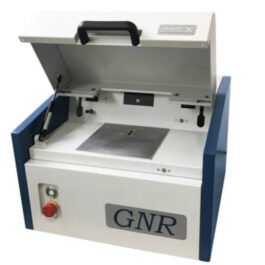
Biotribometer B2V2 ASTM F732
6-Station BioTribometer for ASTM F732 Biomaterials B2V2
Methods: ASTM F732
• Multidirectional, 6-station tribological testing platform purpose-built for ASTM F732 biomechanical and orthopaedic wear simulation
• Replicates complex motion profiles, including circle, square, line, lemniscate (figure-eight), U-shape, and fully user-defined custom trajectories
• Six fully automated, synchronised test stations with independent loading and parallel sample testing for maximum laboratory throughput
• Programmable load profiles up to 500 N support physiological gait load cycles and custom loading sequences
• Operates on standard single-phase power only and requires no pneumatic supply.
• Simplified installation and minimal maintenance
• Motion frequency 0.5–2 Hz, amplitude up to ±10 mm, precisely replicating cross-shear effects in biological joints and implants
• Temperature-controlled testing up to 50°C with fluid recirculation compatible with bovine serum, saline, and synthetic lubricants
• Integrated touchscreen interface with onboard software programmable motion profiles, trajectory editor, real-time monitoring and error diagnostics
• Continuous data logging with timestamped traceability, a full audit trail for research, regulatory, and publication requirements
• Optional friction sensor integration and external temperature controller for extended environmental testing capability
• Ultra-compact footprint (400 × 260 × 1000 mm) designed for space-limited research laboratories
The Paltro B2V2 BioTribometer: Precision Tribological Testing for Biomaterials Research
The Paltro B2V2 BioTribometer is a six-station, multidirectional tribological testing platform purpose-engineered for realistic simulation of biomechanical and orthopaedic material wear. Fully compliant with ASTM F732, the internationally recognised standard test method for wear testing of polymeric materials used in total joint prostheses, the B2V2 delivers the motion profile fidelity, load programmability, and long-duration stability required by the world’s most demanding biomaterials research programs.
For research centres, universities, and medical device developers working with orthopaedic implant materials, joint prostheses, antimicrobial coatings, dental biomaterials, cardiovascular device coatings, and next-generation tissue-engineered constructs, tribological performance is a critical and non-negotiable characterisation requirement.
The B2V2 provides the experimental platform to generate the wear data that underpins regulatory submissions, academic publications, and material qualification decisions with a level of motion complexity and throughput that conventional tribometers cannot match.
Multidirectional Motion Profiles Replicating the Complexity of Biological Joints
At the heart of the B2V2 is its multidirectional motion capability. Biological joints do not move in a single plane; they generate complex, multidirectional sliding patterns that produce cross-shear effects recognised as a primary driver of wear in ultra-high-molecular-weight polyethylene (UHMWPE) and other bearing materials used in joint prostheses. Accurately replicating these cross-shear effects in the laboratory is essential for generating clinically relevant wear data.
The B2V2 supports circular, square, linear, lemniscate, U-shaped, and fully user-defined custom motion trajectories, all programmable via the integrated touchscreen interface. Motion frequency is adjustable from 0.5 to 2 Hz with amplitudes up to ±10 mm, giving researchers precise control over the kinematic conditions of their wear simulation experiments.
Six Stations: Synchronised Motion, Independent Loading
The B2V2’s six-station configuration allows up to six specimens to be tested simultaneously, dramatically increasing throughput compared to single-station instruments. All six stations share a common motion drive system, ensuring fully synchronised motion across every specimen throughout the test duration, a critical requirement for inter-specimen comparability within a single experiment.
At the same time, the modular configuration allows independent loading at each station, enabling multi-variable experimental designs where different loads can be applied to different specimens within the same test run. Load profiles are programmable up to 500 N, with support for physiologically relevant gait load cycles alongside fixed loading protocols.
No Pneumatics: Simplified Installation for Any Laboratory
Unlike conventional tribometers that require a pneumatic supply for actuation, the B2V2 operates entirely on standard single-phase electrical power (110–230 VAC, 50/60 Hz). This eliminates the need for compressed air infrastructure, simplifies laboratory installation, reduces ongoing maintenance requirements, and enables flexible placement in any research environment, including university laboratories, hospital research facilities, and medical device company testing suites where pneumatic infrastructure may not be available.
Controlled Test Environments: Temperature, Fluid, and Friction
The B2V2 supports testing in physiologically relevant fluid environments, including bovine serum, saline, and synthetic lubricants, with temperature control up to 50°C via external temperature controller integration and fluid recirculation. This enables accurate simulation of the synovial fluid environment of natural and prosthetic joints, a prerequisite for meaningful characterisation of biomaterial wear.
Optional friction sensor integration extends the B2V2’s capabilities to simultaneous measurement of the coefficient of friction throughout the wear test, delivering richer datasets from every experimental run.
Automation, Monitoring & Data Integrity
The B2V2’s integrated touchscreen control software provides continuous real-time display of test progress, status, and error indicators, enabling confident, unattended long-duration operation. Continuous data acquisition with timestamped traceability ensures a complete, auditable record of every test run, supporting both research publication requirements and regulatory documentation workflows.
Technical Details of BioTribometer B2V2
| Parameter | Specification |
| Model | B2V2 BioTribometer |
| Manufacturer | Paltro |
| Test Standard | ASTM F732 |
| Test Stations | 6 stations with common motion drive system |
| Load Range | Up to 500 N, programmable |
| Load Profiles | Fixed load; physiological gait load cycle; custom programmable |
| Motion Profiles | Circle, square, line, lemniscate (figure-eight), U-shape, custom user-defined |
| Motion Frequency | 0.5 to 2 Hz |
| Motion Amplitude | Up to ±10 mm |
| Temperature Range | Up to 50°C with fluid recirculation |
| Test Fluids | Bovine serum, saline, or synthetic lubricants |
| Specimen — Upper Pin | 9 mm diameter, 30 mm length (other sizes and geometries available) |
| Specimen — Lower Disc | 30 mm diameter standard; 45 mm diameter also available (other sizes possible) |
| Control Interface | Integrated touchscreen with onboard software |
| Software Capabilities | Programmable motion profiles, trajectory editor, real-time monitoring, error diagnostics |
| Data Logging | Continuous acquisition with timestamped traceability |
| Options | External temperature controller; friction sensor integration |
| Power Supply | 110–230 VAC, 50/60 Hz, 1-phase No pneumatic supply required |
| Net Dimensions | 400 × 260 × 1000 mm |
| Net Weight | 70 kg |
The Paltro B2V2 BioTribometer is engineered for research environments where biomechanical wear simulation accuracy, multi-specimen throughput, and long-duration testing stability are non-negotiable.
- Orthopaedic implant materials – ASTM F732 wear testing of UHMWPE, PEEK, ceramics, metals, and composite bearing materials for hip, knee, shoulder, and spinal implants
- Dental biomaterials — tribological evaluation of dental restorative materials, prosthetic components, and implant surface coatings
- Antimicrobial and bioactive surface coatings — wear durability and tribological performance of antimicrobial, hydroxyapatite, and other bioactive coatings on implant surfaces
- Cardiovascular device materials — wear and surface degradation assessment of materials used in heart valves, vascular stents, and catheter components
- Tissue engineering scaffolds — tribological characterisation of load-bearing tissue-engineered constructs and hydrogel materials under physiological conditions
- Bone regeneration research — evaluation of bone substitute materials and scaffold surfaces under cyclical loading and fluid environments
- 3D bioprinting material qualification — wear and surface integrity testing of 3D-printed biomaterial structures for load-bearing applications
- Regenerative medicine — characterisation of biopolymer and biocomposite materials under biomechanical wear conditions
- Stem cell and biomaterial interaction research — substrate surface evaluation under tribological conditions relevant to cell adhesion and proliferation
- University and hospital research laboratories —Tribology research requiring ASTM F732-compliant equipment
Frequently Asked Questions — Paltro B2V2 BioTribometer
Q1: What is a BioTribometer and what does it measure?
BioTribometer is a specialised tribological testing instrument designed to simulate the wear and friction conditions that occur in biological systems, particularly in orthopaedic joint implants, dental prostheses, cardiovascular devices, and other biomedical materials. The Paltro B2V2 BioTribometer measures the wear of biomaterials under controlled motion, load, temperature, and fluid conditions that replicate the mechanical environment of human joints. Key outputs include gravimetric wear (mass loss), volumetric wear, surface topography changes, and, with optional friction sensor integration, coefficient of friction data throughout the test cycle.
Q2: What is ASTM F732 and why is it important for biomaterials testing?
ASTM F732 is the Standard Test Method for Wear Testing of Polymeric Materials Used in Total Joint Prostheses, published by ASTM International. It specifies the equipment requirements, specimen geometry, motion profiles, load conditions, test fluids, and data reporting procedures for standardised tribological evaluation of bearing materials used in joint replacement implants. Compliance with ASTM F732 is required or referenced by regulatory bodies including the US FDA and TGA in Australia when evaluating the safety and performance of orthopaedic implant materials for clinical use. The Paltro B2V2 is designed to comply with ASTM F732 load and motion profiles, making it the appropriate instrument for regulatory-grade biomaterials wear characterisation.
Q3: What motion profiles does the B2V2 BioTribometer support?
The B2V2 supports the following programmable motion profiles: circle, square, line, lemniscate (figure-eight), U-shape, and fully user-defined custom trajectories via the integrated trajectory editor. These multidirectional profiles are critical for replicating the cross-shear effects observed in natural and prosthetic joints, a key factor in accelerating the wear of UHMWPE and other polymer bearing materials that is not captured by simple unidirectional wear tests. Motion frequency is adjustable from 0.5 to 2 Hz, with amplitude up to ±10 mm
Q4: How many specimens can be tested simultaneously?
The B2V2 accommodates six specimens simultaneously across its six test stations. All stations share a common motion drive system, ensuring fully synchronised motion across every specimen in the experiment. Each station can be independently loaded, enabling multi-variable experimental designs. For example, testing different loads on different specimens within the same run. This six-station throughput significantly reduces the time and cost of wear studies compared to single-station instruments.
Q5: What test fluids can be used in the B2V2?
The B2V2 is compatible with bovine serum (the standard lubricant specified in ASTM F732), saline solution, and synthetic lubricants. Testing is conducted in liquid-holding cells that maintain the specimen in contact with the test fluid throughout the test cycle. The external temperature controller option allows fluid temperature to be maintained up to 50°C with fluid recirculation, enabling physiologically relevant test conditions that simulate the thermal environment of the human body.
Q6: Does the B2V2 require a pneumatic supply?
No. Unlike many conventional tribometers and wear testers, the Paltro B2V2 operates entirely on standard single-phase electrical power (110–230 VAC, 50/60 Hz). No pneumatic or compressed air supply is required. This significantly simplifies laboratory installation, eliminates the need for compressed air infrastructure, and reduces ongoing maintenance, making the B2V2 suitable for a wide range of laboratory environments, including university research labs, hospital-based research facilities, and biomedical company testing suites.
Q7: What specimen sizes does the B2V2 support?
The standard specimen configuration for the B2V2 is a pin-on-disc geometry: upper pin of 9 mm diameter and 30 mm length, and a lower disc of 30 mm diameter (45 mm diameter also available). Other sizes and geometries are possible. Contact Radiant Instruments to discuss your specific specimen requirements and confirm compatibility with your experimental protocol.
Q8: Can friction be measured during the wear test?
Yes, with the optional friction sensor integration. When equipped with optional friction sensors, the B2V2 provides continuous coefficient of friction (CoF) measurement throughout the wear test cycle, delivering simultaneous wear and friction data from the same experimental run. This is particularly valuable for research into lubricant performance, surface coating tribology, and the relationship between friction and wear mechanisms in biomaterials.
Q9: Is the B2V2 suitable for long-duration unattended testing?
Yes. The B2V2 is specifically designed for long-duration, high-stability testing. The integrated touchscreen software provides continuous real-time monitoring of test progress, status, and error indicators, with visual alerts if any parameter falls outside acceptable bounds. This enables the instrument to run unattended overnight or over multiple days without operator intervention, a critical capability for the multi-million-cycle wear simulations required by ASTM F732 and orthopaedic implant qualification programs.
Q10: Is local support available for the B2V2 BioTribometer?
Yes. The Paltro B2V2 BioTribometer is distributed in Australia, New Zealand, Papua New Guinea, Fiji, and across Oceania by Radiant Instruments. We provide full local support, including pre-sale technical consultation, instrument commissioning, operator training, and ongoing after-sales technical support. Contact our team at radiantinstruments.com.au, call +61 (0)3 9424 1963, or email info@radiantinstruments.com.au.